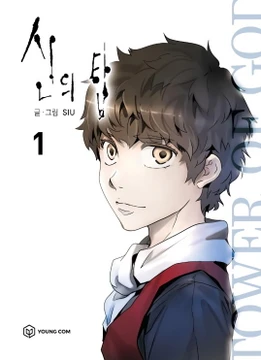
Ten Great Families
Ten bloodlines, one Tower—each a throne of lightning, fire, or steel.

The Ten Great Families are the ten noble houses that, alongside the Zahard Empire, rule the Tower of God. Founded by the ten warriors who climbed the Tower alongside Zahard, these families possess immense political, military, and economic power, controlling vast territories and resources within the Tower. Each family is known for a unique shinsoo quality or attribute inherited from its founder, such as the Khun family's lightning and spear-like shinsoo or the Yeon family's searing flame, and their members are among the most powerful Rankers in existence.
- Founders
- Ten Great Warriors
- Affiliation
- Zahard Empire
- First appears
- Season 1, Episode 1 (referenced)
- Status
- Active
- Notable families
- Khun, Arie, Ha, Lo Po Bia, Yeon, Ari, Po Bidau, Tu Perie, Hendo Lok, Eurasia
Lore & Background
The Ten Great Families trace their origins to the legendary climb of the Tower alongside King Zahard. Each family was founded by one of the Ten Great Warriors, who were granted immense power and authority after Zahard became king. These families have since intermarried and expanded, creating a complex web of alliances and rivalries that define the Tower's political landscape. Their members are born with innate shinsoo abilities tied to their family's attribute, such as the Khun family's lightning-based shinsoo or the Arie family's swordsmanship. Crucially, the families signed a contract with Zahard that prevents them from challenging the king directly.
In Their Own Story
In the shadow of the Inner Tower's grand hall, a young Khun noble stands before a council of elders. The air crackles with tension as they debate the family's next move in the war against the Irregular. 'We cannot afford hesitation,' the elder hisses, his ice-blue eyes gleaming. The young noble clenches his fists, knowing that his family's legacy—and the fate of the Tower—hangs in the balance, but also that the Khun's storied cunning might be the only edge against an enemy who defies all rules.
Reader's Guide
The Ten Great Families are the ruling elite of the Tower, each controlling vast territories and armies. Their primary goal is to maintain their power and influence within the Zahard Empire, often engaging in political maneuvering and conflict with one another. Key members include the family heads, who are among the strongest beings in the Tower, and their descendants, who fill high-ranking positions in the military and administration. In the current conflict, the families are divided, with some supporting Zahard and others aligning with the Irregular Bam, leading to a civil war that threatens to reshape the Tower's hierarchy. This schism has turned former allies into bitter enemies, and the blood of noble houses now stains the floors of the very halls they once ruled.
Did You Know?
- Each of the Ten Great Families has a unique shinsoo attribute inherited from its founder, such as the Khun family's lightning or the Yeon family's fire.
- The heads of the Ten Great Families are thousands of years old, making them some of the oldest beings in the Tower.
- The families often arrange marriages to strengthen alliances, leading to complex bloodlines and rivalries.
- Despite their power, the families are bound by a contract with Zahard that forbids them from directly challenging the king.
Position at the Apex of Tower Governance
The Ten Great Families occupy the highest floor of the Tower, functioning as its governing body. They sit above the Rankers—former Regulars who have climbed to the summit and are typically far more powerful than other inhabitants—and above the vast population of Regulars originally chosen from the Outer Tower to attempt ascension. At the head of this governing collective stands King Jahad, also rendered as "Zahard" in certain translations, who serves as the chief leader. The entire social architecture of the Tower is stratified by floor: ascending requires passing increasingly difficult tests of strength, dexterity, and wit, and those who succeed earn better living conditions and higher status. The Ten Great Families, by virtue of their position at the summit, represent the ultimate tier of this hierarchy, overseeing a structure where even the most powerful Rankers are often assigned to administer the lower floors.
The Shinsu Economy of the Upper Floors
Shinsu, roughly translated as "Divine Water," permeates every floor of the Tower, but its concentration and power escalate dramatically as one climbs. On lower floors it is diffuse and nearly invisible, much like ambient air; on the upper floors where the Ten Great Families reside, it becomes viscous and flows like water, demanding high resistance merely to enter. Manipulating Shinsu requires a formal contract with the guardian of each floor, and proficiency is measured in discrete units called Bang, with size designated Myeon and concentration called Soo. Those who master Shinsu gain slowed aging to the point of effective immortality. The Ten Great Families, inhabiting the floor where Shinsu is most potent, exist within an environment where the raw power available is unmatched by any lower level. Their position is thus not merely political but fundamentally tied to the most concentrated expression of the Tower's defining substance.
Jahad's Immortality and the Irregular Exception
A critical plot mechanism revolves around a contract that King Jahad struck with the Tower's Guardians, rendering him immortal. However, this immortality carries one specific loophole: individuals classified as Irregulars are entirely exempt from the contract's protections. Consequently, only an Irregular possesses the capacity to kill Jahad, a fact that drives much of the narrative's central tension. The Ten Great Families, as the governing body Jahad leads, operate within a system where this singular vulnerability is both a known truth and an existential threat. Irregulars like Twenty-Fifth Bam, who somehow opened the Tower's impenetrable doors, are viewed by the Tower's inhabitants as calamitous entities with unfathomable power. Even the most powerful Rankers stigmatize and fear them. The Ten Great Families thus govern a world where their chief leader's invincibility is absolute—except against the very people the Tower's prophecies seem to herald as agents of change.
Scale, Isolation, and the Sealed World
The Tower is a completely enclosed structure sealed from the vast, unknown Outside by impenetrable doors that only extraordinary individuals—Irregulars—can open. According to the author, each floor spans the size of the North American continent, and many floors harbor their own distinct cultures, languages, and governance systems. It is not uncommon for entire nations to exist in isolation, entirely unaware that the Tower even exists. The Ten Great Families govern this immense, self-contained world from its summit, overseeing a vertical civilization where ascension is the sole path to higher status. The Tower hosts many different intelligent species, and its internal logic—tests of strength, dexterity, and wit; the contract system with floor guardians; the flow and reverse-flow control of Shinsu—creates a closed ecosystem. For the Ten Great Families, this sealed, continent-scale structure is both their domain and their boundary, a world whose outer limits no one from within can cross.
Frequently Asked Questions
Who are the Ten Great Families in Tower of God?
They are the ten hereditary noble houses that co-rule the Tower of God alongside the Zahard Empire. Each family descends from one of the ten warriors who originally climbed the Tower with Zahard, and their members consistently rank among the most powerful fighters in the entire structure.
What unique shinsoo powers do the Ten Great Families have?
Every family inherits a distinct shinsoo attribute from its founding warrior—for instance, the Khun line wields piercing ice while the Yeon line commands searing flame. These innate qualities give each house a signature combat style and set its members apart from ordinary Rankers.
How did the Ten Great Families come to exist?
After the Ten Great Warriors climbed the Tower together with Zahard, their descendants established hereditary houses that each control their own territory, military force, and economic resources. Over generations these ten bloodlines solidified into the dominant political and military power bloc within the Tower's hierarchy.
What is the political relationship between the Ten Great Families and the Zahard Empire?
The families operate under the Zahard Empire's overarching authority but retain substantial autonomy over their lands, armies, and internal affairs. In practice they function as the Empire's primary enforcers and administrators, making them the backbone of the Tower's governance structure.
Which Ten Great Families appear most prominently in the story?
The Khun family (Khun Agatha, Khun Rak) and the Yeon family (Yeon Wonsu) get the most screen time, while the Arie, Ha, and Lo Po Bia houses also play key roles in the early arcs. All ten—Khun, Arie, Ha, Lo Po Bia, Yeon, Ari, Po Bidau, Tu Perie, Hendo Lok, and Eurasia—are referenced throughout the series.
More in Factions & Groups
Elsewhere in the Tower of God universe
Spotted an error? Know more?
This is a living reference — every entry is fact-audited, and reader corrections feed straight into our audit queue. Suggest an edit · See this site's audit record